

Are you experiencing pain in your shoulder with reaching movements or when sleeping on your shoulder? If this is the case, you may be experiencing a rotator cuff injury! Rotator cuff injuries are very common with up to 70% of people experiencing one in their lifetime (Wong et al. 2020). These injuries can often affect your quality of life through pain and reduced shoulder function.
The rotator cuff muscles of the shoulder consist of 4 small muscles that originate close your shoulder blades with their tendons wrapping around your shoulder to attach into your humerus at the front of your arm. They are incredibly important muscles as they act to stabilise the joint and facilitate rotational movements of the shoulder (Akhtar, Richards & Monga, 2021). General symptoms include pain (generally in the front of the upper arm/shoulder) when reaching above head, in front, to your side or behind your back. You may also experience pain at night or when sleeping on your affected shoulder.
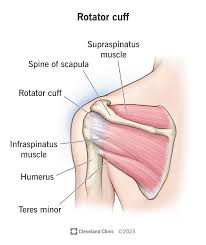
If you have been experiencing symptoms for more than 2 weeks, we would highly recommend you see a therapist at Action Rehab. You can book in directly with a therapist without a GP referral!
How rotator cuff injuries occur:
• Trauma or acute injuries e.g fall and twisted arm
• overuse injuries e.g tendinopathy from repetitive use
• Age related changes
How our therapists at Action Rehab can help:
• Providing an in-depth assessment of your condition and formulating a treatment plan tailored to your needs.
• Amazing advice and education on how to manage the condition, healing timeframes, load management and ensuring you have a great understanding of the condition.
• Creating a structured and personalised exercise and rehabilitation program to bring back strength to the shoulder, reduce your pain and get you back to living life to the fullest!
• Manual therapies such as soft tissue massage to help improve pain levels and range of motion.
• Referral for scans or surgical opinions (only if necessary)
Tips on how to manage your shoulder pain:
• Try and not sleep on the affected shoulder. Have your affected arm/shoulder resting on a pillow. • Apply heat to the affected area. • Self-massage to the affected area.
• Gentle assisted shoulder movements to ensure the joint does not stiffen.
Remember, the earlier you see a therapist, the better the outcomes can be! Book an initial assessment today at Action Rehab by calling 1300 762 227.
References:
Wai Keung WONG, Ming Yan LI, Patrick Shu-Hang YUNG, Hio Teng LEONG, The effect of psychological factors on pain, function and quality of life in patients with rotator cuff tendinopathy: A systematic review, Musculoskeletal Science and Practice,Volume 47, 2020, 102173, ISSN 2468-7812, https://doi.org/10.1016/j.msksp.2020.102173. Ahsan Akhtar, James Richards, Puneet Monga. The biomechanics of the rotator cuff in health and disease – A narrative review, Journal of Clinical Orthopaedics and Trauma, Volume 18, 2021, Pages 150-156, ISSN 0976-5662, https://doi.org/10.1016/j.jcot.2021.04.019.